LEGO Christmas village ideas: plan a display that grows every year
By Your World in Bricks · Published November 5, 2026; set prices checked on LEGO.com the same day. One idea, putting your own house in the village, is ours and is labelled “From us”.
A good LEGO® Christmas village starts with one scale (minifigure scale, like LEGO’s Winter Village sets), a snowy base built in modules you can extend each year, and a layout with a street at the front and taller buildings on a raised back row. Add light, then one new building a year: the 2026 Winter Village set is the Holiday House ($119.99).
Below: this year’s sets, then the planning, from snow to lighting to packing it away.
Winter Village is LEGO’s seasonal line of minifigure-scale buildings for adults, with a new set most years. Prices on LEGO.com (US) on November 5, 2026:
Photo: the LEGO Group
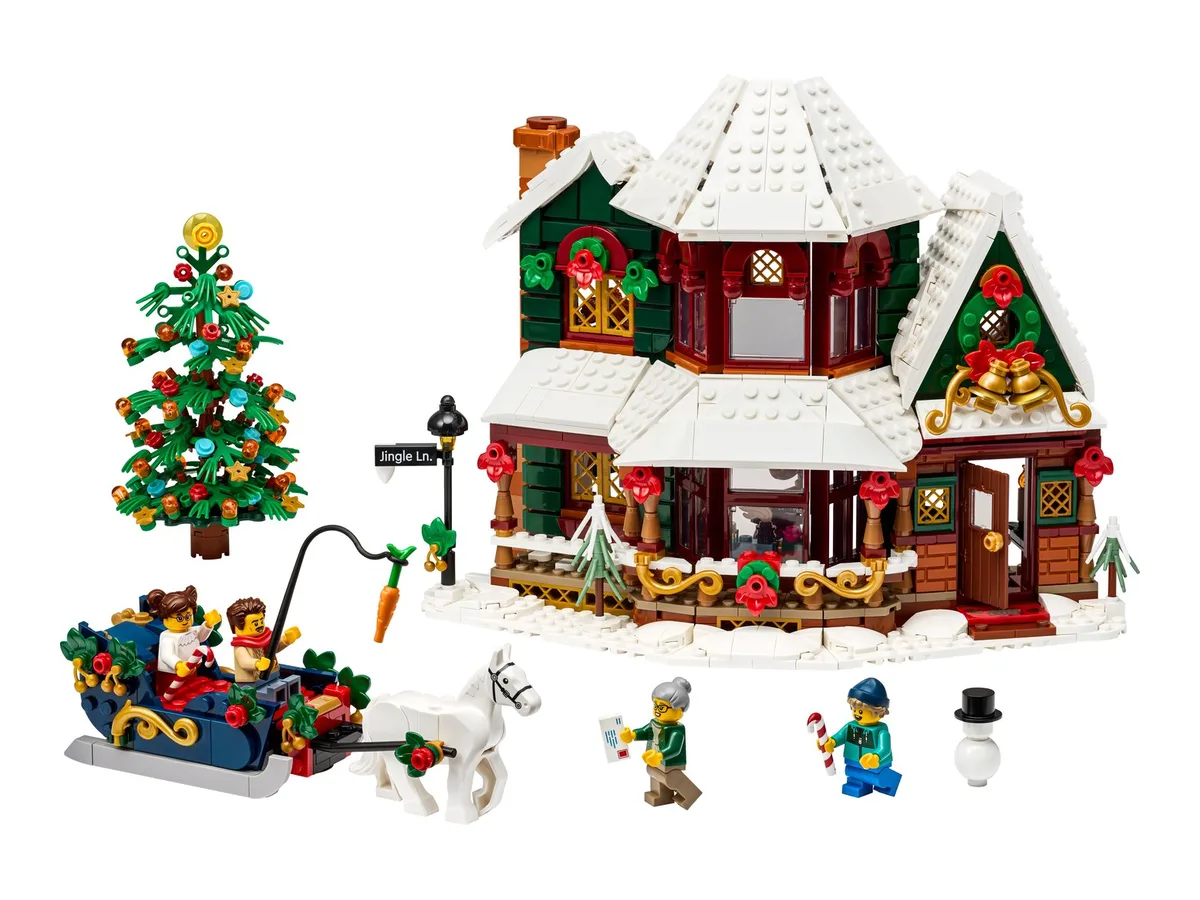
Holiday House
Set 11387 · 1,354 pieces · Ages 18+ · $119.99
The 2026 Winter Village set: a Victorian-style house with a wrap-around porch, bay windows and a furnished two-story interior. A light brick makes the Christmas tree glow through the windows, and it comes with a horse-drawn sleigh, a snowman and four minifigures.
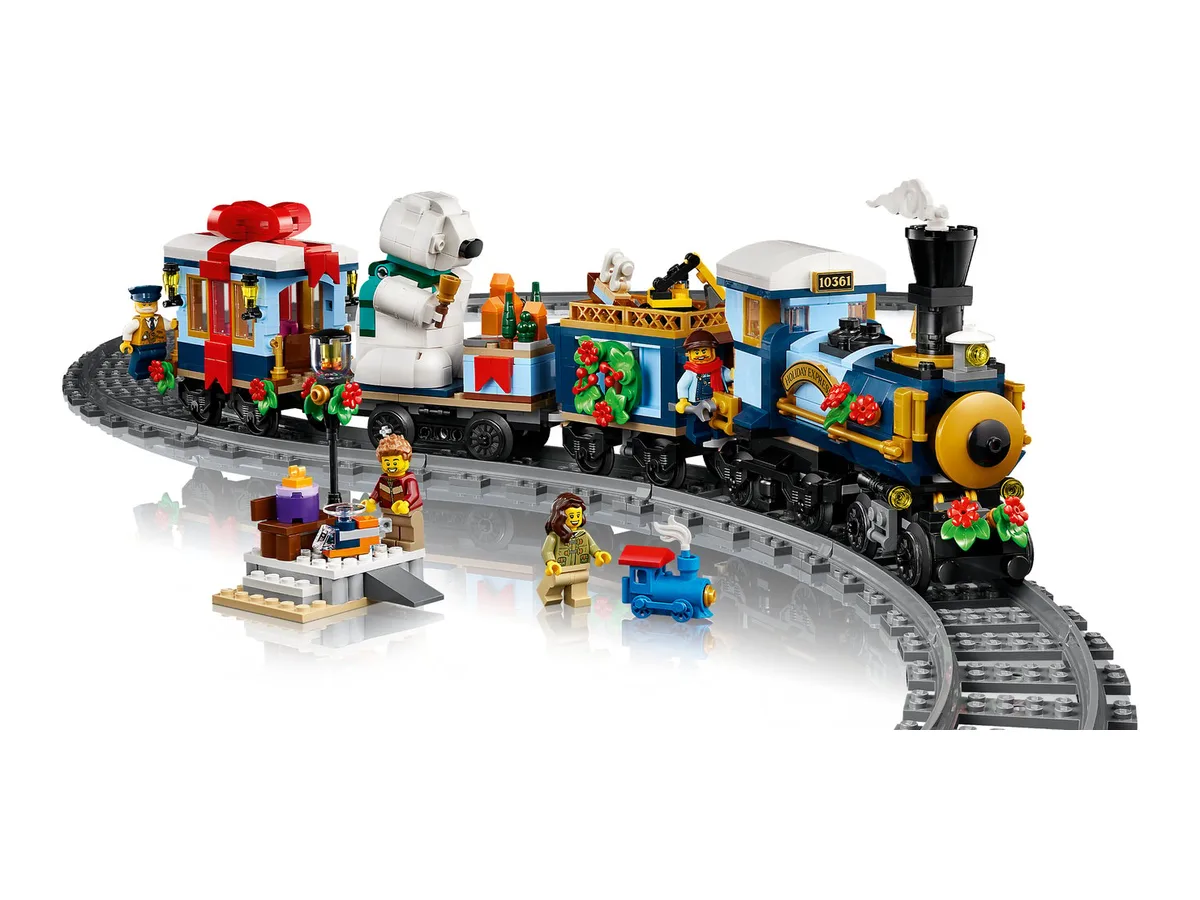
The 2025 Winter Village train: a locomotive, tender, flatcar and furnished end car on a 16-piece circle of track made to run around a holiday tree, with a platform, four minifigures and two instruction books for building together. It can be motorized with Powered Up parts, sold separately.
If you can find it elsewhere in time, it is the set that makes a village move.
On backorder at lego.com (“will ship in 60 days”), so it won’t arrive from LEGO by Christmas.
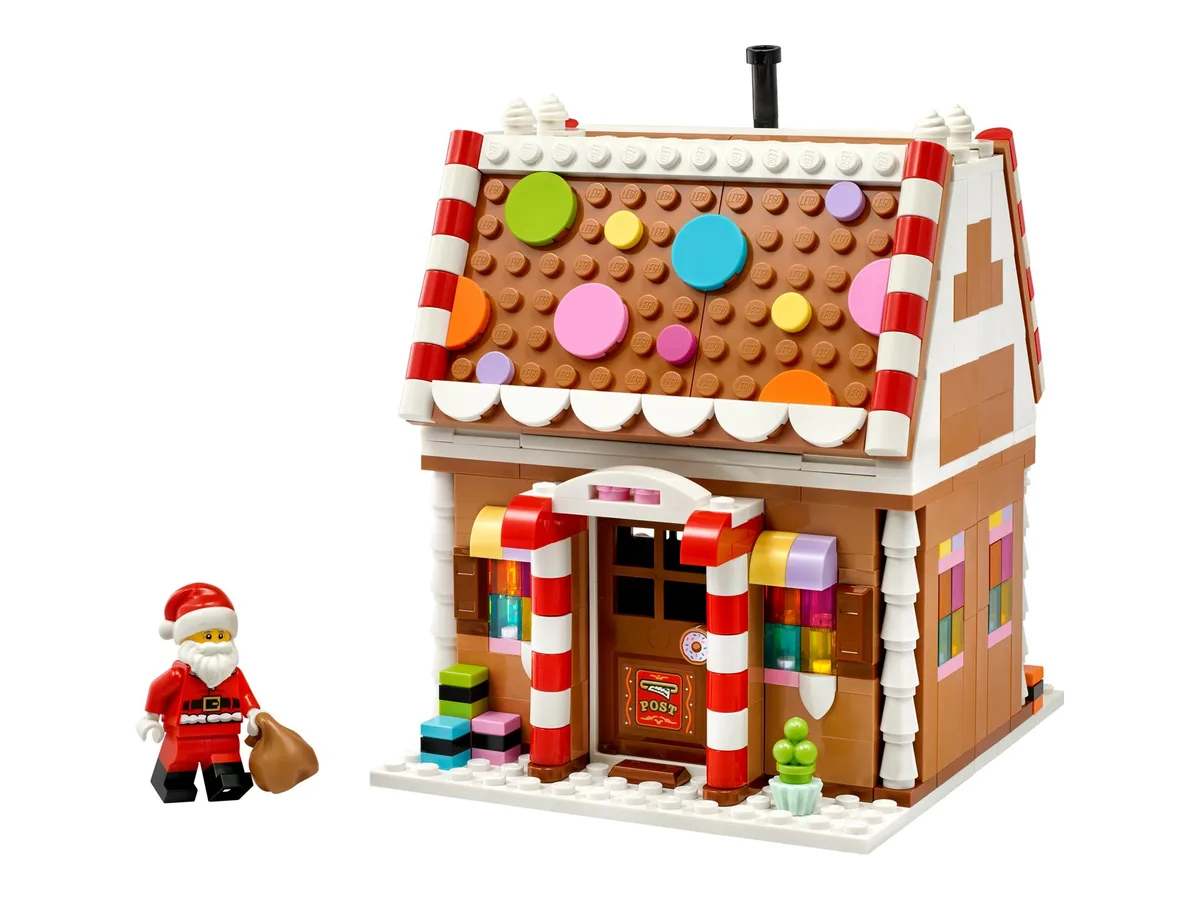
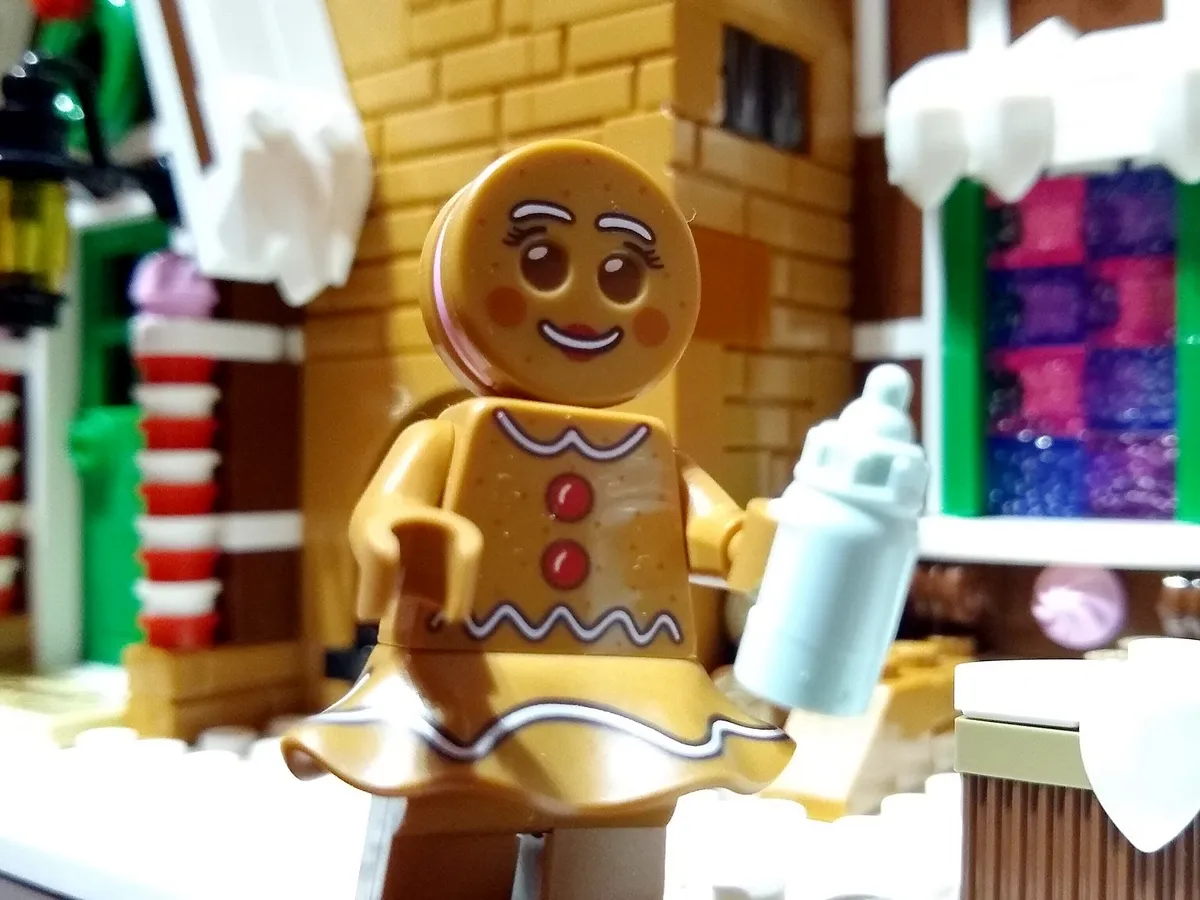
A candy-covered gingerbread house that opens to show Santa’s desk, fireplace and bedroom, with a Santa minifigure. About 6 inches tall: a table centerpiece or a village cottage.
Not a Winter Village set, but it is built around a Santa minifigure and opens up like the village houses, so it can sit at the end of the street.
Older Winter Village sets such as Santa’s Post Office (sold out on LEGO.com), Holiday Main Street and Alpine Lodge (both retired) now come from the secondary market (BrickLink, eBay), where prices vary.
Prices, piece counts and stock are from LEGO.com (US) on November 5, 2026, and they change often, especially around Insiders Weekend (November 21–22) and Black Friday to Cyber Monday (November 27–30). We’re independent of the LEGO Group and earn nothing from these links.
1. Pick one scale and stick to it
Mixing scales is what makes a village look like a pile of sets. Choose one:
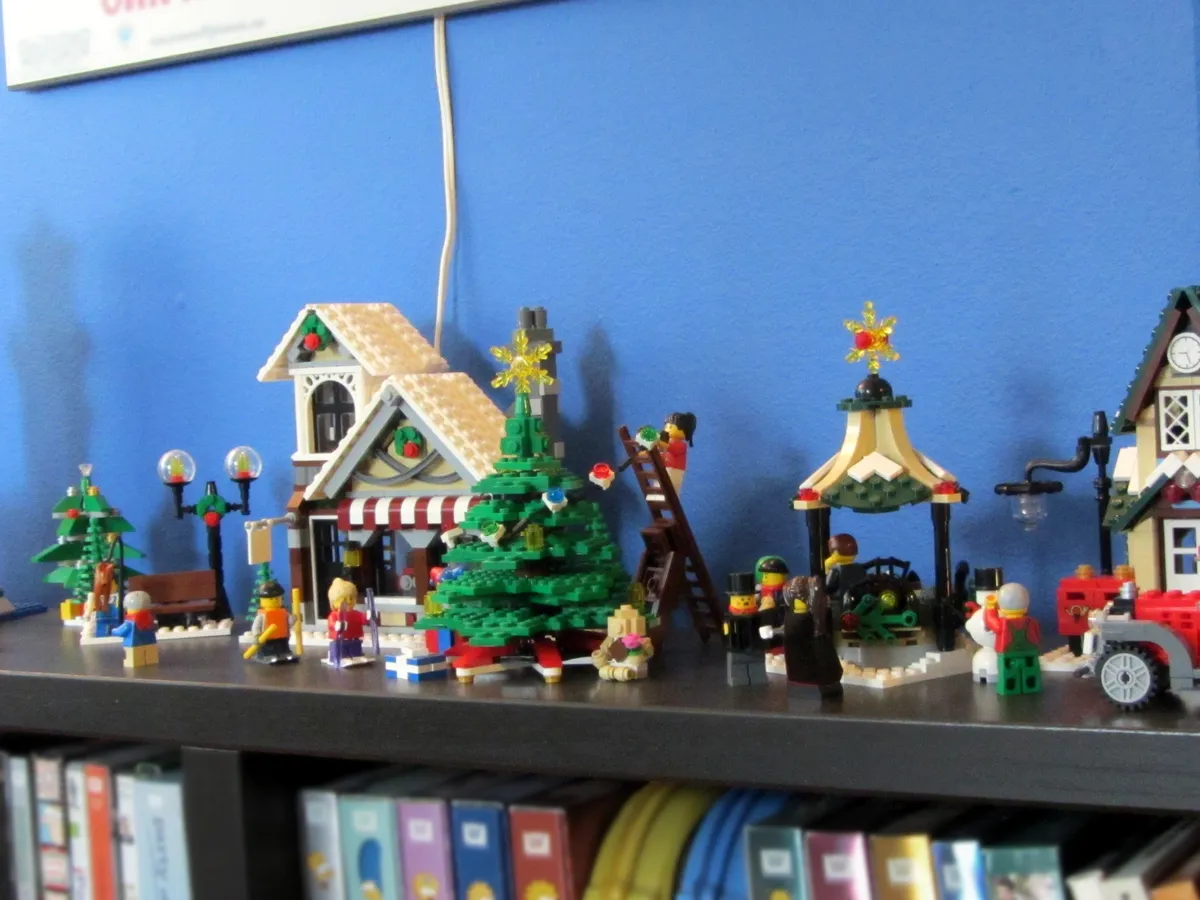
Minifigure scale is what the Winter Village sets and most fan-built houses use: a house is roughly 16 to 32 studs wide, with doors a minifigure walks through. It has the most ready-made buildings and accessories, and needs a sideboard or table.
Microscale shrinks a house to a few studs wide. A whole town fits on a mantel or a bookshelf, it uses far fewer pieces, and a tree can be a single cone-shaped piece.
If you do mix sizes, use perspective: larger buildings at the front, smaller ones on the raised back row, so the difference reads as distance.
2. Build a base you can extend
White plates make the snow. Leave studs exposed for fresh-fallen snow, and tile paths and roads smooth so they read as cleared.
Build in modules. Make each section on its own plates (a 32 × 32 baseplate, or smaller plates joined underneath) so the village packs away in pieces and grows a module at a time.
Drifts and edges: white slopes, curved slopes and stacked round plates against walls and along roofs turn flat ground into snowbanks.
A frozen pond: transparent light blue or clear tiles over white or blue plates, with white tiles at the edge as snow.
Avoid loose fake snow. Flakes and powder work into the gaps between bricks. A felt or batting snow blanket under and around the modules is easier to clean.
3. A layout that looks good from the front
A village is almost always seen from one side, like a shop window. Plan it that way:
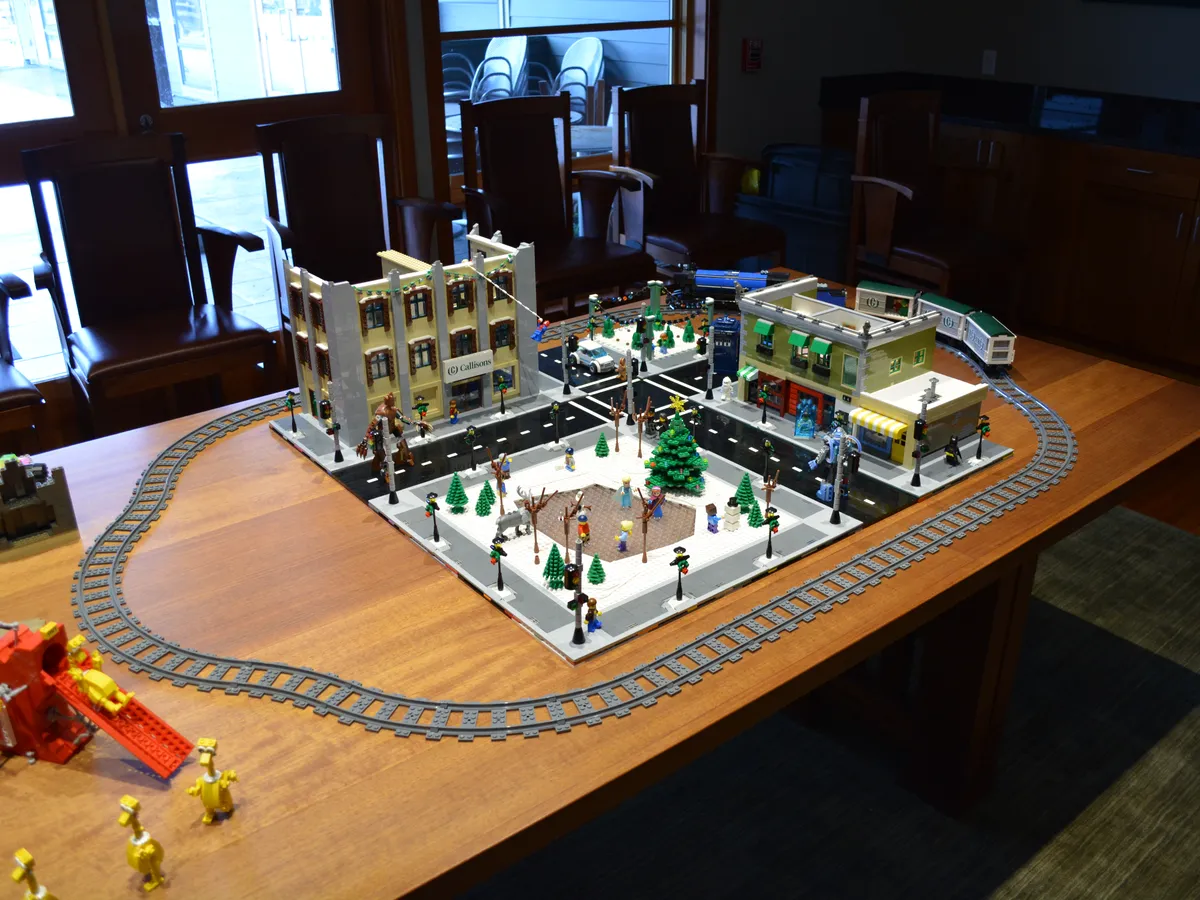
A street along the front edge with minifigures, lampposts and a sleigh or a vehicle.
A square in the middle with a big tree, a market stall or a skating pond: the place your eye lands first.
Taller buildings on a raised back row. Boxes or books under the snow blanket lift the back row so every roofline shows.
An arm’s length deep. Deep displays are hard to dust and rearrange; two or three rows is plenty.
A train around the edge, if you have one: it makes the display move and frames the village.
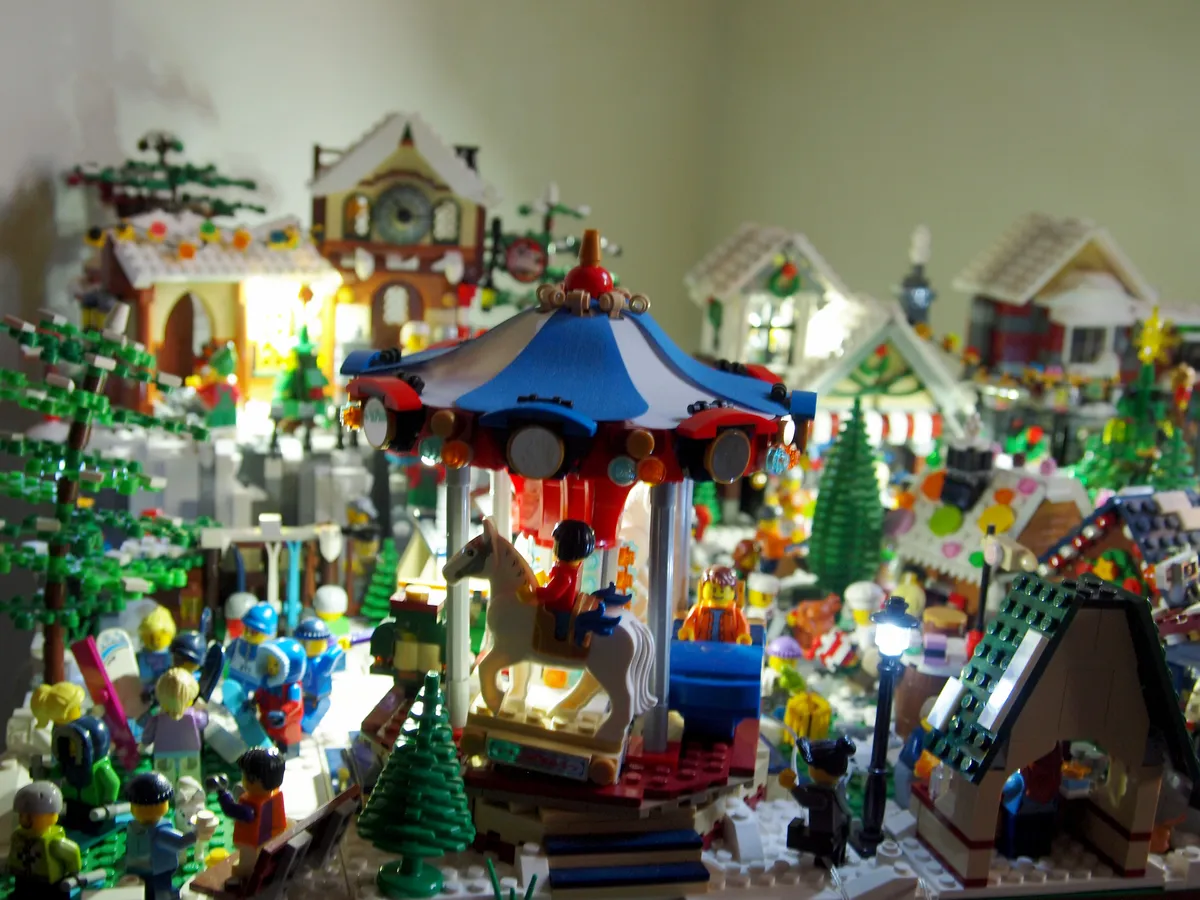
Battery LED fairy lights tucked behind and under buildings, with transparent yellow or clear pieces in the windows, are the easiest start. LEDs stay cool, which matters near plastic.
Built-in light bricks: some sets include one, like the Holiday House, whose tree glows through the windows.
Third-party light kits made for specific official sets light rooms, streetlamps and fireplaces with thin cables threaded between the bricks.
Hide the wires under the base modules and run them to the back, where a battery box or a USB hub sits out of sight.
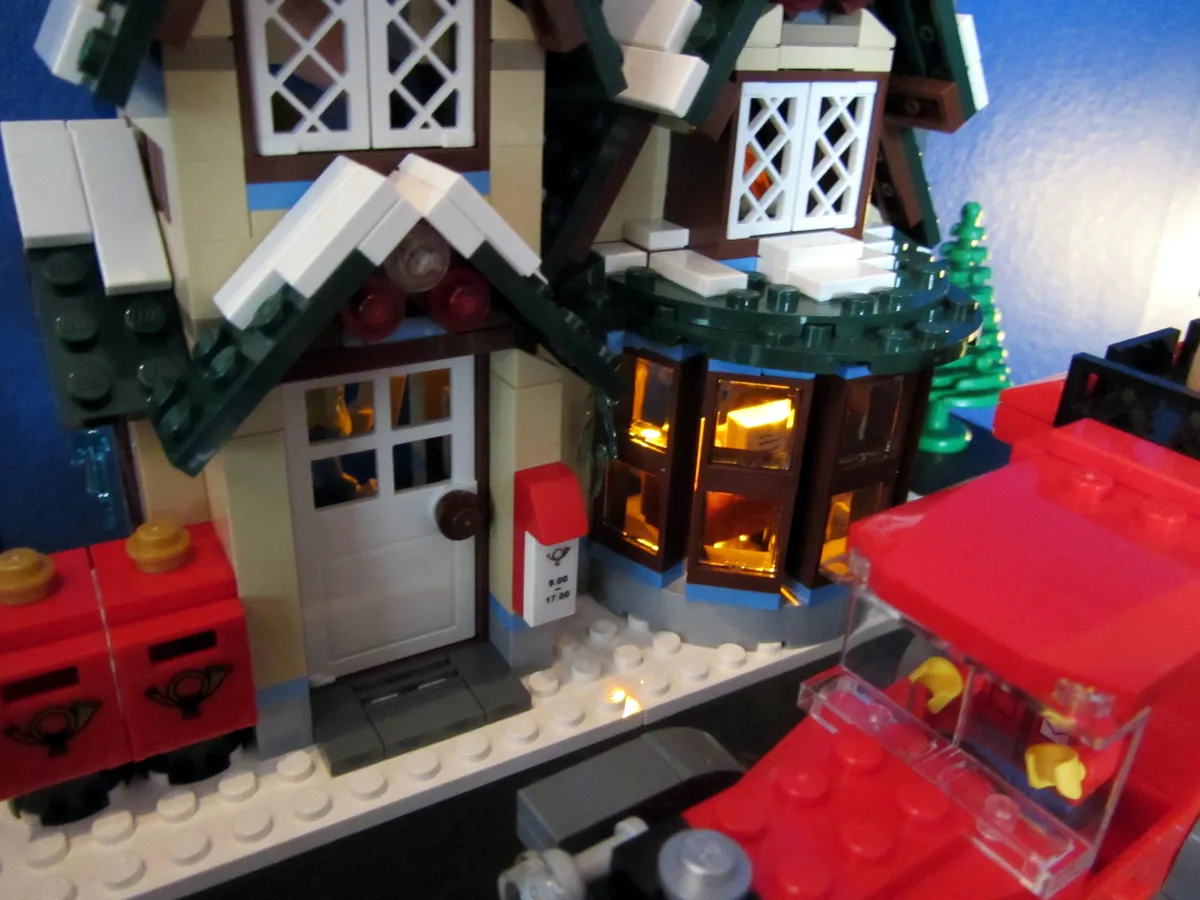
Warm light in the windows is what makes a village at night“Warming glow” by Loozrboy, CC BY-SA 2.0, croppedFairy lights behind the scene, blurred, look like a snowy eveningPhoto by Tim Offermans on Unsplash
5. Add a building nobody else has
The building every visitor asks about is the one they recognize. Many fans design their own village houses, a church, a bakery or a cabin, from bricks they already have. Or make it your own home:
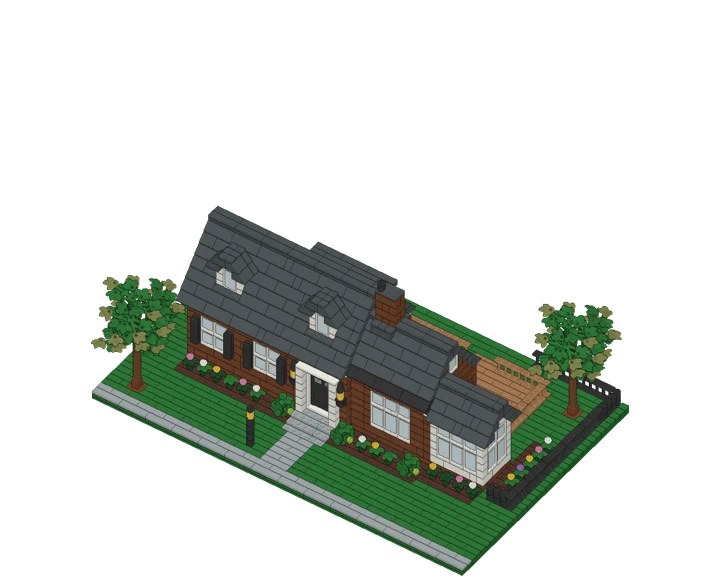
A brick model of their own houseFrom us
Custom design $19, any size · Bricks sold separately, about $60–$110 for 500 pieces
Not a LEGO set: Your World in Bricks designs a model of any simple detached house from a few photos, with an illustrated instruction book and a parts list for real LEGO® bricks, ready within 24 hours. The bricks come from LEGO® Pick a Brick, BrickLink or the bins they already own.
Our house designs are display models sized by piece count, not built to minifigure scale, so a small one suits the back row and a larger one becomes the centerpiece. The house is designed as it looks in your photos: add the snow yourself with white tiles along the roof edges and lawn, and a wreath on the door.
Loose bricks take longer than boxed sets. LEGO® quotes about 5 days for Pick a Brick Bestseller pieces and up to 28 business days for Standard pieces in the US (LEGO® Help, as of October 2026); BrickLink depends on each store. Our custom designs themselves are quick: usually ready in about an hour, delivered within 24 hours. Running late? Wrap the printed instruction book and let the bricks follow.
6. Pack it away so next year is easy
Photograph the layout from the front and above before you take it down.
Store each building whole in its own box with tissue, rather than breaking it down.
Add one thing a year. A new building, a module of base or a light kit keeps the village growing without a December rush.
Holiday House (11387): a Victorian-style house with a wrap-around porch, a light-up Christmas tree, a horse-drawn sleigh, a snowman and four minifigures. 1,354 pieces, $119.99 on LEGO.com.
What scale is a LEGO Christmas village?
The Winter Village sets and most fan-built villages are minifigure scale, with houses roughly 16 to 32 studs wide. Microscale villages, a few studs per house, fit a mantel or shelf.
How do you make snow for a LEGO village?
With white plates, leaving studs exposed for fresh snow and tiling paths smooth. Add white slopes and round plates for drifts, and put a felt snow blanket underneath rather than loose fake snow, which gets into the bricks.
How do you light a LEGO Christmas village?
Battery LED fairy lights behind the buildings and transparent pieces in the windows are the simplest. Some sets include a light brick, and third-party kits made for specific sets light the inside of each building.
Can I add my own house to my LEGO village?
Yes. We design a brick model of your house from photos, with instructions and a parts list for real LEGO® bricks, within 24 hours; it isn’t built to minifigure scale, so choose the size by where it will stand. Or turn a winter photo into brick art.